

In the world of metal manufacturing, Continuous Casting Process stands out as one of the most efficient and widely used methods for producing semi-finished metal products. This process is used to create metal forms such as billets, slabs, strips, plates, and tubes, typically made from steel, copper, aluminum, and their alloys.
Today, over 90% of the world’s steel production relies on continuous casting technology. It has transformed the metal industry by improving productivity, reducing waste, and enhancing product quality.
A Brief History
The concept of continuous casting dates back to 1856, when Henry Bessemer first proposed the idea. However, the technique only became commercially viable in the 1930s and 1940s for non-ferrous metals such as copper and aluminum.
It wasn’t until the 1960s that the process was successfully adapted for steel, which presented greater challenges due to its high melting point and low thermal conductivity.
By the 1980s, continuous casting had overtaken traditional ingot casting as the dominant method for steel production. The shift was driven by clear advantages:
- Higher quality steel,
- Better dimensional accuracy,
- Energy and labor efficiency, and
- Reduced material waste.
How the Continuous Casting Process Works
Continuous casting is designed to transform molten metal into a solid, semi-finished shape through a controlled, continuous process. The steps are as follows:
1. Pouring
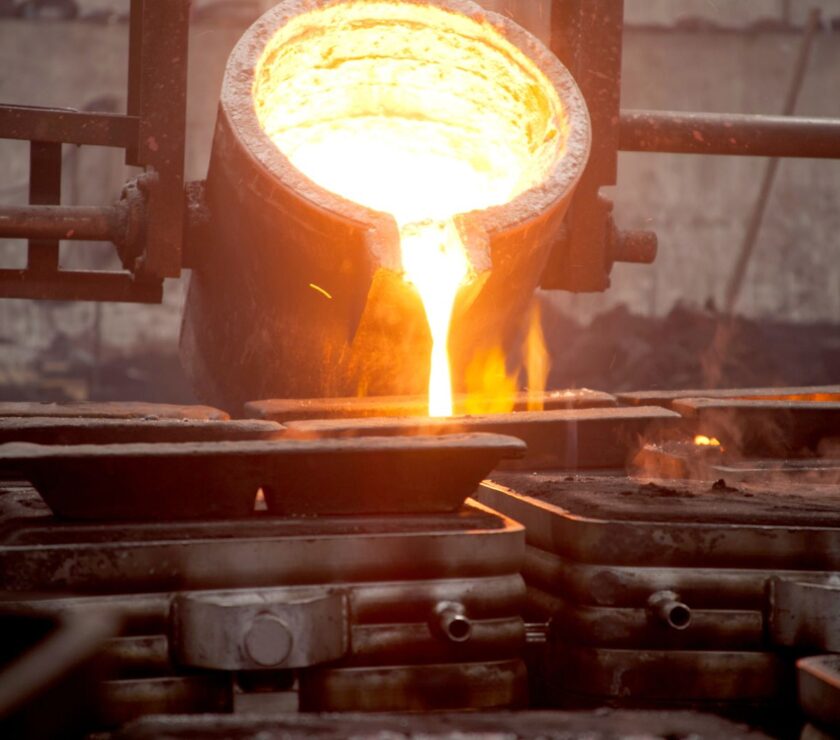
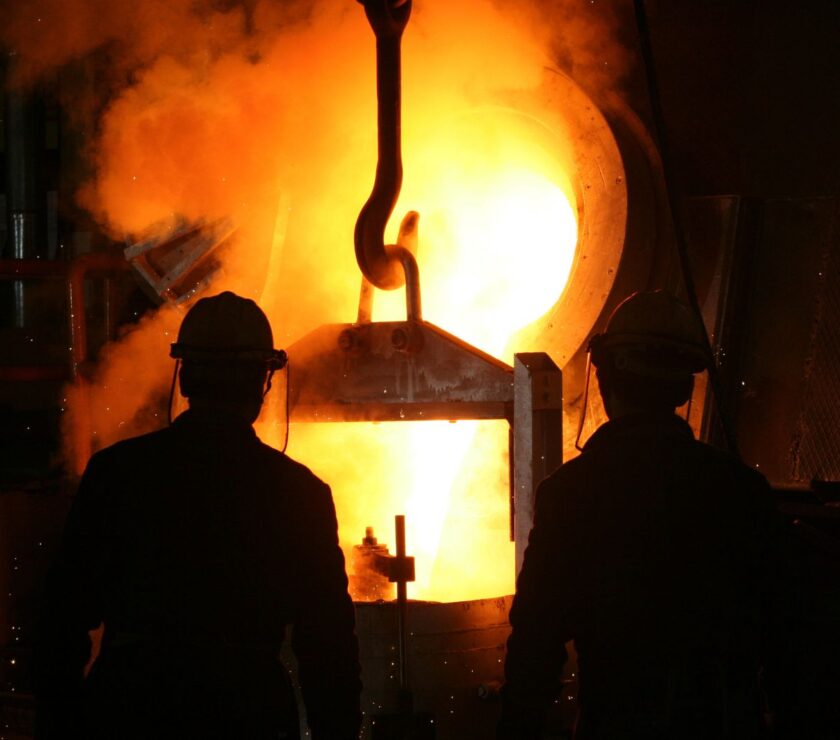
Molten metal from a furnace is poured into a tundish, which serves as a reservoir feeding the mold continuously.
2. Molding and Cooling
The molten metal flows into a water-cooled mold, which rapidly cools the metal and begins the solidification process.
The outer shell solidifies first, forming a thin, rigid layer while the inner part remains molten.
4. Cutting
Once the product reaches the desired length, it is cut by a traveling saw into sections ready for further processing.
This rapid cooling produces a fine-grained, homogeneous structure, giving the metal excellent strength, consistency, and surface quality compared to traditional sand casting.
Types of Continuous Casting Systems
There are two primary configurations of continuous casting, each suited for different industrial needs:
1. Vertical Continuous Casting
In this system, molten metal flows vertically downward from the tundish into a graphite mold housed in a cooling crystallizer.
As the metal exits the mold, water sprays further cool it until fully solidified. The strand is then guided by rollers, cut to length, and moved for further processing.
Typical equipment includes:
- Melting furnace or transfer ladle
- Casting tundish
- Water-cooled crystallizer
- Secondary cooling system
- Roller and cutting saw
This method is ideal for large cylindrical or rectangular products and offers excellent dimensional accuracy.
2. Horizontal Continuous Casting
The principle is similar to the vertical system, but here the molten metal flows horizontally into a graphite mold. The entire setup is aligned on one level, making it more compact and easier to maintain.
Horizontal casting is often used for smaller products or hollow profiles, such as tubes and rods, because it minimizes the effect of gravity on the molten metal.
Shapes such as round, square, hexagonal, and custom profiles can be produced efficiently using this system. It’s also known for its cost-effectiveness in medium-scale production runs.
Advantages of Continuous Casting
Continuous casting offers multiple benefits compared to older ingot casting or sand casting methods:
- Higher productivity — metal is cast continuously without interruption.
- Superior quality — the controlled cooling ensures dense, homogeneous metal with minimal porosity.
- Reduced machining requirements — smoother surfaces mean less post-processing.
- Energy and labor savings — less handling and fewer heating cycles.
- Consistent dimensions — ideal for high-precision, long-length products.
- Excellent performance under pressure — products exhibit strong mechanical integrity due to fine-grain structure.
Additionally, continuous casting minimizes slag entrapment because the molten metal flows downward naturally, allowing impurities to float to the surface before solidification.
Common Problems in Continuous Casting
Despite its many advantages, the process is not without challenges. The most common issues include:
1. Oxygen Contamination
During casting, oxidation can occur if molten metal comes into contact with air, especially at extreme temperatures (up to 1,700°C for steel). This can lead to inclusions, gas entrapment, or slag impurities.
To prevent this, molten metal is often covered with synthetic slag or isolated from air using sealed ladles and tundishes. The first portions of each casting are usually quarantined because they are more likely to contain contaminants.
2. Breakout
A breakout happens when the solid outer shell of the casting ruptures, causing molten metal to leak out — a serious and costly incident.
Breakouts are typically caused by:
- Thin outer shell due to poor cooling,
- Uneven water flow in the cooling system,
- Excessive withdrawal speed, or
- Overheated molten metal entering the mold.
Modern systems use automated sensors and computer controls to detect early signs of breakout and adjust the process immediately.
Disadvantages of Continuous Casting
While highly efficient, continuous casting also presents a few drawbacks:
- High initial investment – requires expensive machinery and precise automation.
- Limited flexibility – changing product shapes or sizes often needs major equipment adjustments.
- Risk of porosity – rapid cooling can sometimes trap air or gas pockets.
- Safety concerns – any breakout or cooling system failure can cause severe damage or injury.
Conclusion
Continuous Casting revolutionized the metal industry by introducing a faster, cleaner, and more efficient way to produce semi-finished metal products.
Its ability to create high-quality, dense, and uniform materials makes it indispensable for steel, copper, and aluminum production worldwide.
Although the equipment and setup require significant investment, the long-term gains in productivity, energy efficiency, and quality consistency far outweigh the costs.
In short, continuous casting is not just a process, it’s a cornerstone of modern metallurgical innovation, ensuring that industries have access to reliable, high-performance materials for decades to come.