

What is Investment Casting?
Investment casting, also known as lost-wax casting, is a precision metal casting method that uses wax patterns to create detailed and accurate final components. The wax pattern is formed using a master die, which can be made from metal or other suitable materials. Once shaped, the wax pattern is coated with ceramic layers to create a solid mold that can hold molten metal.
This process is widely used in manufacturing industries that require high accuracy and excellent surface quality, such as automotive, aerospace, medical equipment, and machinery components. Its main strength lies in its ability to produce complex shapes with minimal machining required afterward.
Investment Casting Process Steps
To better understand the workflow, here are the stages involved in producing parts through investment casting:
1. Creating the Wax Pattern
The process begins by forming the wax pattern that replicates the final product. Liquid wax is poured or injected into the master die. Once solidified, the wax pattern is removed from the die and prepared for assembly.
2. Assembling the Pattern Tree
Multiple wax patterns are then attached to a central wax sprue system, forming what is called a pattern tree or cluster. This structure resembles a tree, where each branch represents a product to be cast.
3. Ceramic Coating (Shell Building)
The pattern tree is dipped into ceramic slurry and then sprinkled with fine sand to build a ceramic shell. This step is repeated multiple times to achieve the required shell thickness and strength. Each coating layer must be air-dried before the next application.
4. Dewaxing
Once the ceramic shell is complete, the entire assembly is heated so that the wax melts and drains out, leaving an empty cavity in the shape of the original pattern.
5. Sintering
The ceramic mold is then fired at high temperatures (around 1,000°C) to harden and strengthen it. This ensures the mold can withstand molten metal during pouring.
6. Metal Pouring
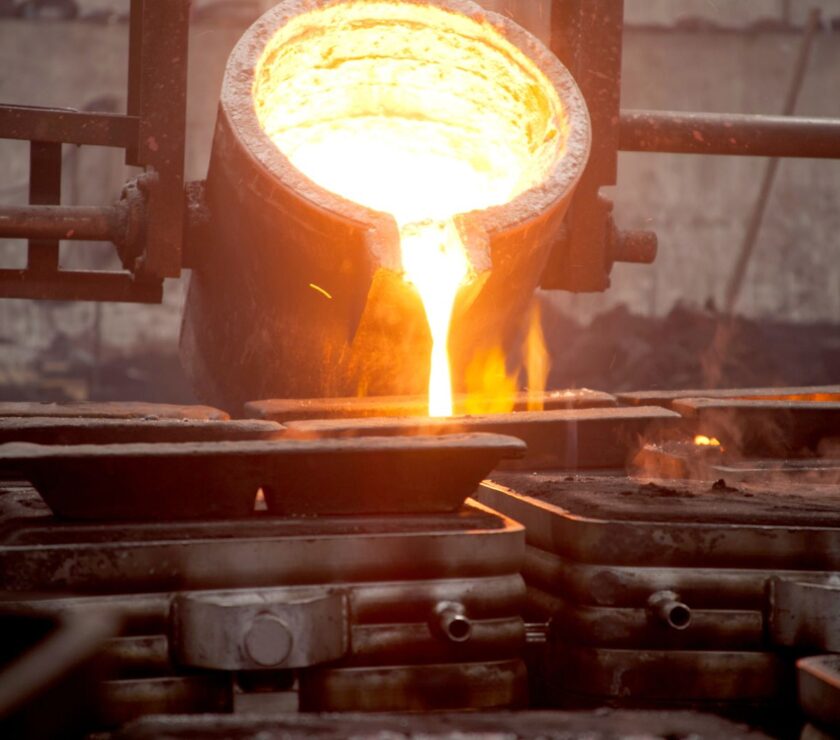
Molten metal is poured into the hot ceramic mold. After the metal cools and solidifies, the ceramic mold is broken away, revealing the cast product.
Advantages of Investment Casting
- Excellent Surface Finish
Produces smooth surfaces with no parting lines. - Complex Shapes Can Be Produced
Ideal for components with intricate geometries that are difficult to manufacture using other methods. - High Dimensional Accuracy
Suitable for parts requiring tight tolerances and precise measurements. - Minimal Machining Required
Many castings can be used directly with little to no post-processing. - Recyclable Wax
The wax used in pattern-making can be reclaimed and reused, reducing material costs.
Limitations of Investment Casting
- The process involves multiple steps and therefore tends to require more time, labor, and production cost.
- Generally suited for small to medium-sized components.
- Not ideal for castings that require internal hollow features unless special techniques or cores are used.
Investment casting is an excellent manufacturing solution when high precision, fine surface finish, and complex product geometry are required. While the process may be more time-consuming than other casting methods, the high-quality results make it a preferred choice in many advanced industries.