






In the modern manufacturing world, two things matter most: efficiency and material strength. One advanced process that delivers both is Squeeze Casting, a unique method that merges the principles of casting and forging into one precise, high-performance system.
By applying pressure to molten or semi-solid metal during solidification, squeeze casting produces dense, durable components with exceptional mechanical properties — far superior to those made through conventional casting methods.
What Is Squeeze Casting?
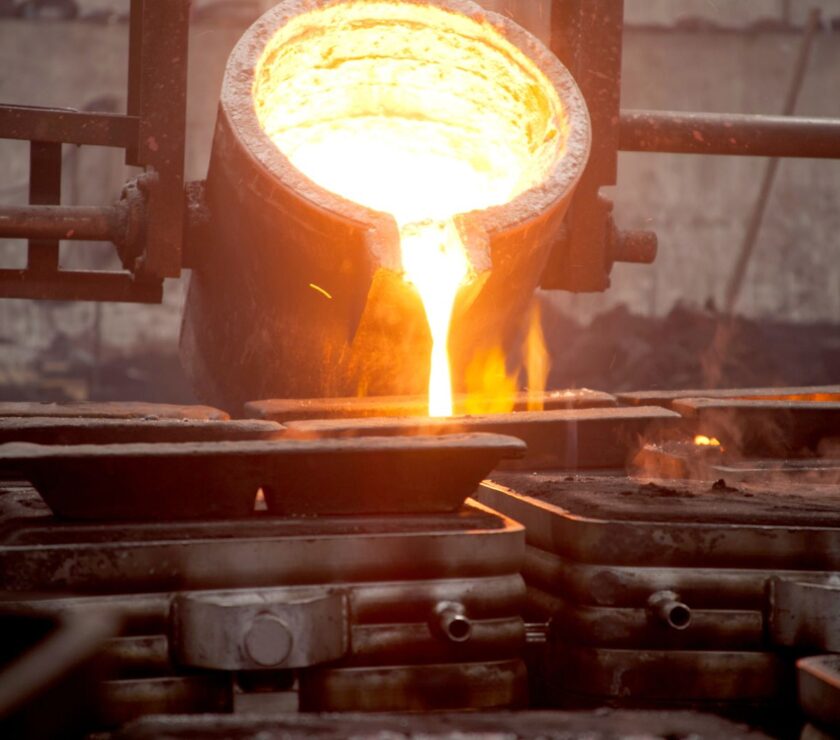
Squeeze Casting is a hybrid process combining metal casting and forging. During this process, molten metal is poured into a preheated die and compressed under high pressure (typically 50–140 MPa) as it solidifies.
The applied pressure prevents the formation of gas porosity and shrinkage defects, ensuring a fully dense structure. The result is a product that combines the complex shape capabilities of casting with the strength and toughness of forging.
This makes squeeze casting an excellent choice for producing lightweight, high-strength parts for industries such as automotive, aerospace, and heavy machinery.
Key Process Parameters of Squeeze Casting
To achieve a defect-free casting, several critical parameters must be carefully controlled throughout the squeeze casting process:
1. Casting Temperature
The pouring temperature depends on the alloy and product geometry, typically maintained 6–55°C above the alloy’s liquidus temperature.
If the temperature is too low, molten metal may solidify before filling the cavity completely. If too high, it can cause excessive shrinkage and dimensional inaccuracies.
Studies show that at around 700°C, castings can reach hardness levels up to 97.86 VHN, although the optimal temperature varies depending on the alloy used.
2. Tooling Temperature
The temperature of the die or tooling plays an important role in determining the cooling rate and microstructure.
The typical die temperature ranges between 190°C and 315°C, while the punch temperature is usually set 15–30°C lower to allow adequate ventilation and prevent metal sticking.
A lower die temperature increases the cooling rate, resulting in a finer grain structure, while a higher temperature may reduce mechanical strength.
3. Pressure and Duration
Squeeze casting requires a pressure range of 70–120 MPa, applied by a hydraulic punch that compacts the molten metal as it solidifies.
The pressure duration, usually between 30–120 seconds, ensures that the metal solidifies uniformly under compression.
Higher pressure and longer duration typically result in greater density, hardness, and tensile strength.
4. Melt Volume and Time Delay
The amount of molten metal poured into the cavity must be precisely controlled.
A short time delay between pouring and applying pressure allows the metal to spread evenly before being compressed.
If the delay is too short, air can be trapped; if too long, partial solidification may occur before pressure is applied.
5. Filling Rate
A moderate filling rate is crucial to maintaining a laminar flow of molten metal.
Too slow, and the metal loses heat too quickly, leading to premature solidification or cold shuts.
Too fast, and turbulence occurs, trapping air and creating porosity.
Therefore, optimizing the filling rate is key to ensuring smooth metal flow and consistent solidification.
6. Lubrication
Lubricants are applied to the die surface to facilitate easy product removal, reduce wear, and extend the mold’s lifespan. Proper lubrication also prevents sticking and improves surface finish quality.
Factors Affecting Casting Quality
Several variables directly impact the final quality of a squeeze cast component:
- Pouring temperature – influences filling ability and grain structure.
- Die temperature – affects cooling rate and microstructure.
- Pressure level – determines density and mechanical strength.
- Filling rate – ensures smooth, defect-free solidification.
Conclusion
Squeeze Casting is an innovative process that bridges the gap between casting and forging — combining the best of both worlds.
By precisely controlling parameters such as temperature, pressure, time, and filling rate, metal casting manufacturers can produce components that are denser, stronger, and more durable than traditional castings.
This process is now widely used in automotive, aerospace, and industrial applications, where strength, precision, and reliability are essential.
With its proven ability to enhance both quality and performance, squeeze casting stands as one of the most advanced and reliable metal forming technologies in modern engineering.